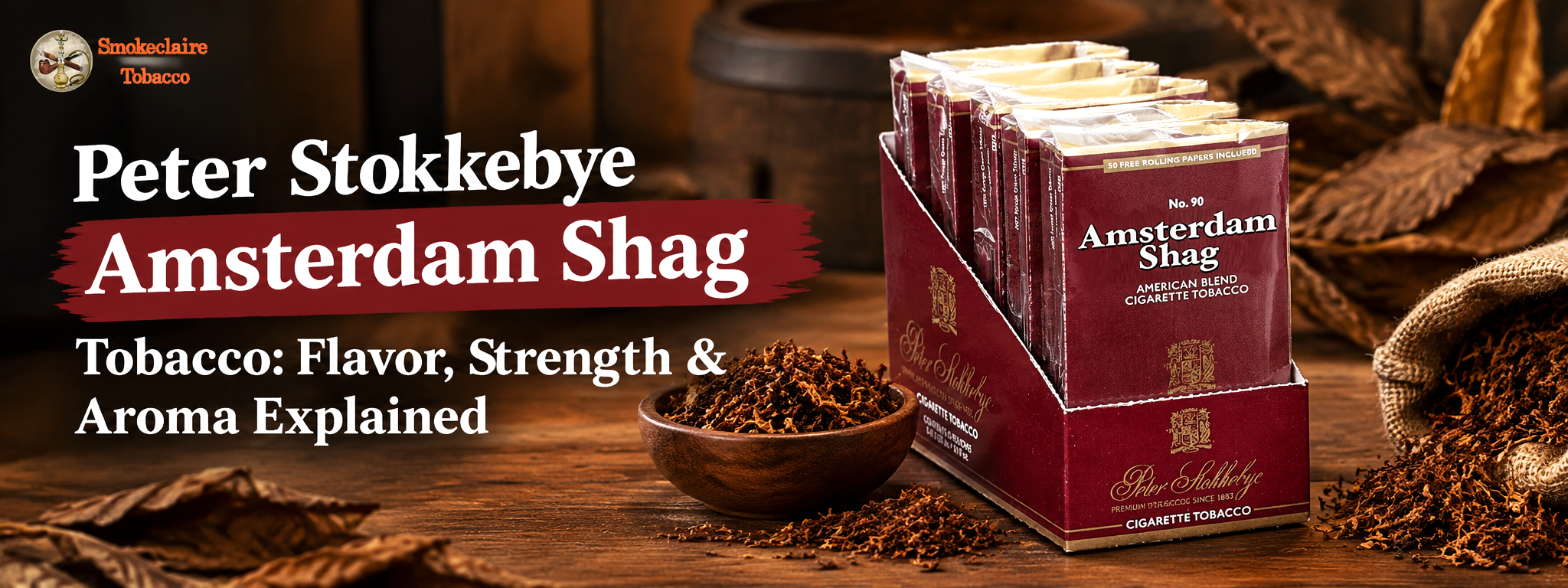
Peter Stokkebye Amsterdam Shag Tobacco: Flavor, Strength & Aroma Explained
Tobacco flavor is influenced by several factors, including the type of tobacco used, how the leaves are cured and processed, the cut of the tobacco and its moisture condition. These factors help explain why loose rolling tobacco can differ in texture, aroma and perceived smoking intensity.
Peter Stokkebye Amsterdam Shag is a name associated with loose cigarette tobacco. Understanding what shag means, how tobacco strength differs from flavor and why aroma changes during storage and smoking can help readers better understand this category of tobacco.
This guide covers Amsterdam Shag tobacco flavor, the factors that influence Amsterdam Shag tobacco strength, the meaning of shag cut and practical considerations for storing and comparing rolling tobacco.
What Is Peter Stokkebye Amsterdam Shag Tobacco?
Peter Stokkebye Amsterdam Shag refers to loose tobacco intended for hand-rolled cigarettes. The word shag describes a fine, narrow cut of tobacco rather than a particular flavor or nicotine-strength category.
The cut affects how the tobacco feels when handled and how it can be distributed while rolling a cigarette. Fine strands behave differently from broader tobacco pieces, particularly when the tobacco is handled or exposed to air.
However, cut size alone does not establish the tobacco’s blend, flavor profile or nicotine content. These characteristics depend on the tobacco itself and the processes used to prepare it.
When discussing Peter Stokkebye Cigarette Tobacco, it helps to distinguish three characteristics:
- Cut: The size and shape of the tobacco strands.
- Flavor and aroma: The sensory characteristics associated with the tobacco.
- Strength: A term that may refer to perceived taste intensity, smoking sensation, nicotine delivery or a combination of these.
What Does “Shag” Mean in Rolling Tobacco?
Shag tobacco is cut into fine, narrow strands and is commonly associated with loose tobacco used for hand-rolled cigarettes.
The cut affects texture, handling and how evenly the tobacco can be distributed during preparation. Fine-cut tobacco may feel lighter and looser than tobacco with broader strands, although the actual texture also depends on moisture and processing.
How Cut Size Affects Tobacco Handling
The size and shape of tobacco strands can influence how easily they separate and how evenly they distribute during rolling. Different cuts may also behave differently when compressed or handled.
Cut size affects moisture exchange, too. Fine strands have a relatively large exposed surface area, which can allow them to lose or absorb moisture as environmental conditions change.
These differences do not automatically make one cut better than another. They explain why cut is an important characteristic when comparing loose tobacco.
Does a Fine Cut Mean Stronger Tobacco?
No. A fine cut does not automatically mean stronger tobacco or higher nicotine content.
Cut describes the physical form of the tobacco. Strength depends on other factors, including tobacco composition and how nicotine is delivered during smoking. Two fine-cut tobaccos can differ in taste, aroma and nicotine characteristics.
Amsterdam Shag Tobacco Flavor: What Shapes the Taste?
Amsterdam Shag tobacco flavor should be understood in the context of the tobacco blend and its processing rather than inferred from the name alone.
Tobacco may have earthy, woody, grassy, nutty or slightly sweet sensory characteristics. These are general descriptors used when discussing tobacco, not confirmed tasting notes for every Peter Stokkebye Amsterdam Shag blend.
1. Tobacco Blend
Different tobacco varieties have distinct chemical compositions and sensory characteristics. The proportions used in a blend can influence its aroma, perceived body and overall taste.
The blend is therefore an important factor when discussing flavor. Cut size may influence handling and burning behavior, but it does not reveal which tobacco varieties have been used or how they will taste.
2. Curing and Processing
After harvesting, tobacco leaves undergo curing and other processing steps before being cut and prepared for use.
These processes influence leaf color, moisture, aroma and chemical composition. Differences in curing and processing can contribute to variations in the way tobacco smells and tastes.
It is important to distinguish general tobacco characteristics from specific tasting claims. A particular flavor should not be attributed to Amsterdam Shag without reliable information supporting that description.
3. Moisture Condition
Moisture affects tobacco texture, aroma and burning behavior. Tobacco that becomes excessively dry may feel brittle and lose some of its characteristic aroma. Excessive moisture can create storage problems and may encourage deterioration.
Changes in moisture can also affect how consistently tobacco burns. Appropriate storage helps preserve its existing condition, although it cannot restore characteristics that have already been lost.
4. Individual Sensory Perception
People do not perceive every aroma or flavor in the same way. Previous experience, sensitivity to particular compounds and the surrounding environment can influence how someone describes tobacco.
One person may describe an aroma as earthy, while another may use a different term for a similar impression. Flavor descriptions are therefore subjective observations rather than universal guarantees.
Amsterdam Shag Tobacco Strength: What Does It Mean?
Amsterdam Shag tobacco strength can refer to more than one characteristic. In everyday conversation, the word strong may describe a pronounced tobacco taste, a fuller sensory impression or the effects associated with nicotine.
Understanding these differences helps prevent misleading comparisons.
Perceived Flavor Strength
Flavor strength describes how noticeable or pronounced the sensory characteristics seem. A tobacco with a distinct aroma or pronounced taste is not necessarily higher in nicotine.
Similarly, tobacco with a comparatively mild taste is not necessarily low in nicotine. Taste alone cannot reliably determine nicotine content.
Nicotine Strength
Nicotine content is separate from perceived flavor strength. The amount of nicotine absorbed during smoking is influenced by several factors, including the tobacco, the construction of the cigarette and smoking behavior.
Color, cut size, aroma and subjective taste are not reliable ways to measure nicotine content. Laboratory measurements, where available, provide a more meaningful basis for assessing nicotine levels than appearance or informal descriptions.
Why Strength Can Feel Different Between Tobaccos
Two loose tobacco blends may feel different because their composition, moisture and sensory characteristics differ. The paper and filter used in a hand-rolled cigarette can also affect the overall smoking experience.
The amount of tobacco used and individual smoking behavior further influence exposure. As a result, the same tobacco may not produce an identical experience in every cigarette.
Terms such as mild, full-bodied and strong should not be treated as precise measurements of nicotine exposure or health risk.
What Does Amsterdam Shag Tobacco Smell Like?
Tobacco aroma comes from a mixture of naturally occurring compounds and compounds influenced by curing and processing. Depending on the tobacco, people may use descriptions such as earthy, woody, grassy, dry or sweet.
The precise aroma of a particular blend should not be assumed from its name or cut. Different tobaccos can share a similar cut while having different aromas.
It is also useful to distinguish unburned tobacco from tobacco smoke. Unburned tobacco releases volatile compounds into the surrounding air, while heating and combustion create additional compounds that change the smell considerably.
Storage conditions can alter aroma as well. Exposure to air, heat and unsuitable moisture conditions may cause tobacco to lose some of its original smell or develop unwanted odors.
A noticeable tobacco aroma does not indicate a particular nicotine level. Aroma and nicotine content are different properties, even though both contribute to how tobacco is perceived.
How to Store Shag Tobacco Properly
Fine-cut tobacco can change when its moisture balance is not maintained. Appropriate storage helps preserve its existing condition and reduces the risk of deterioration.
Limit Exposure to Air
Repeated exposure to air can allow moisture and volatile aromatic compounds to escape. A suitable, well-sealed container helps limit these changes.
Avoid Excessive Heat
Heat can accelerate changes in tobacco moisture and aroma. Keep tobacco away from direct sunlight, heaters and other sources of excessive heat.
Maintain Appropriate Moisture Conditions
Tobacco that becomes too dry may turn brittle, while excessive moisture can encourage mold or other deterioration. Avoid adding water or other substances without reliable guidance, as this may create uneven moisture or contamination.
Watch for Signs of Deterioration
A significant change in smell, visible mold or signs of contamination should not be ignored. Tobacco showing signs of mold or deterioration should not be used.
Storage can help preserve tobacco’s condition, but it cannot guarantee that flavor, aroma or nicotine characteristics will remain unchanged indefinitely.
Peter Stokkebye Cigarette Tobacco Compared With Other Rolling Tobacco
When comparing Peter Stokkebye Cigarette Tobacco with other loose tobacco, it helps to assess individual characteristics instead of relying on one description.
Cut: This refers to the size and shape of the tobacco strands. It influences handling but does not establish flavor or strength.
Blend: The tobacco varieties and their proportions can influence aroma and taste. The composition should not be inferred from cut size alone.
Flavor: Flavor describes the sensory qualities perceived during smoking. Descriptions can vary between individuals and should not be confused with measured nicotine content.
Aroma: This refers to the smell of unburned tobacco or its smoke. The two can differ because heating and combustion produce additional compounds.
Strength: This term may describe perceived taste intensity or smoking sensation. It is not a precise measurement of nicotine content.
Moisture: Moisture condition affects texture, handling, aroma and burning behavior. Tobacco that is too dry or exposed to excessive moisture may deteriorate.
These distinctions explain why a single descriptor rarely captures every characteristic of rolling tobacco. A fine cut does not guarantee a particular taste and a pronounced aroma does not establish nicotine strength.
Choosing a Tobacco Shop in Eau Claire, WI
For people in Eau Claire, Wisconsin, comparing rolling tobacco at local tobacco shops, understanding basic tobacco terminology can make conversations with retailers more useful.
Questions about cut, blend terminology, storage and the difference between perceived strength and nicotine content can help clarify what different tobacco descriptions mean. It is also useful to distinguish documented characteristics from subjective flavor impressions.
People searching for the best tobacco shop near me in Eau Claire, WI may have different priorities. Clear communication, knowledgeable assistance and straightforward explanations of tobacco categories are practical considerations when choosing a local retailer.
Knowing the basics of shag tobacco can help customers ask more informed questions without relying on assumptions about flavor, strength or quality.
Final Thoughts
Peter Stokkebye Amsterdam Shag is associated with loose cigarette tobacco in a fine-cut format. Understanding this format provides useful context, but it does not establish a precise flavor profile or nicotine strength.
Amsterdam Shag tobacco flavor can be influenced by the blend, curing, processing, moisture condition and individual sensory perception. Amsterdam Shag tobacco strength also needs careful interpretation because perceived taste intensity and nicotine exposure are not interchangeable.
When comparing rolling tobacco, consider cut, documented blend characteristics, aroma, moisture and storage condition separately. This approach provides a clearer understanding of tobacco terminology and helps distinguish general characteristics from assumptions about a particular blend.
Frequently Asked Questions
1. What is Peter Stokkebye Amsterdam Shag tobacco?
Peter Stokkebye Amsterdam Shag is a loose cigarette tobacco product. The term shag refers to its fine-cut form rather than a specific flavor or nicotine-strength category.
2. What does Amsterdam Shag tobacco taste like?
A precise flavor profile should not be assumed from the name alone. Tobacco flavor can be influenced by the blend, curing and processing methods, moisture condition and individual sensory perception.
3. Is Amsterdam Shag tobacco strong?
The word strong can refer to pronounced flavor, perceived smoking intensity or nicotine exposure. These are different characteristics and cut size or aroma alone cannot establish nicotine content.
4. How should shag tobacco be stored?
Keep shag tobacco in a suitable sealed container away from direct sunlight and excessive heat. Maintain appropriate storage conditions and avoid using tobacco that shows signs of mold or deterioration.
5. What should I consider when comparing rolling tobacco in Eau Claire, WI?
Consider the cut, blend, moisture condition and how flavor and strength are described. A clear distinction between sensory impressions and measurable characteristics can help make comparisons more informed.